Thompson Springs in Nehalem set to house 10 families in 2027
By Jordan Wolfe
After transforming a three-acre lot from environmental timebomb to bucolic Nehalem hideaway, non-profit Sammy’s Place is anticipating the official ground-breaking of their affordable homeownership project Thompson Springs – once the weather is more favorable.
“This is something a little outside the box,” said Sammy’s Place Executive Director Julie Chick. “Affordable housing almost is never homeownership. And it is just like any other home being sold.”
All funding is in place, around $5 million, to build 10 semi-detached homes and the infrastructure of the site, Chick said. With completion anticipated sometime in 2027, the 10 units, a mix of one- and- two-bedroom homes, will be for sale to people who meet certain income requirements.
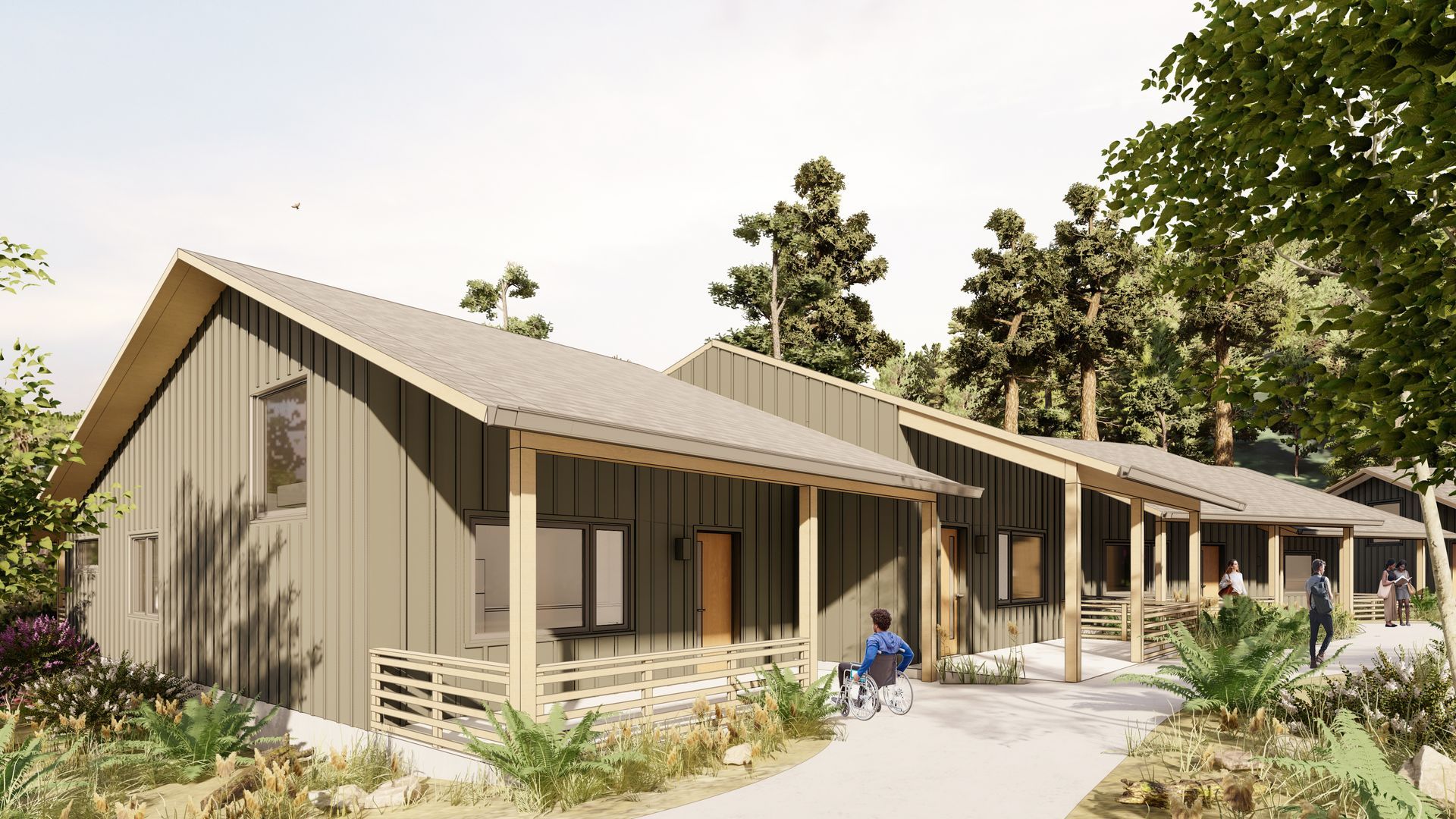
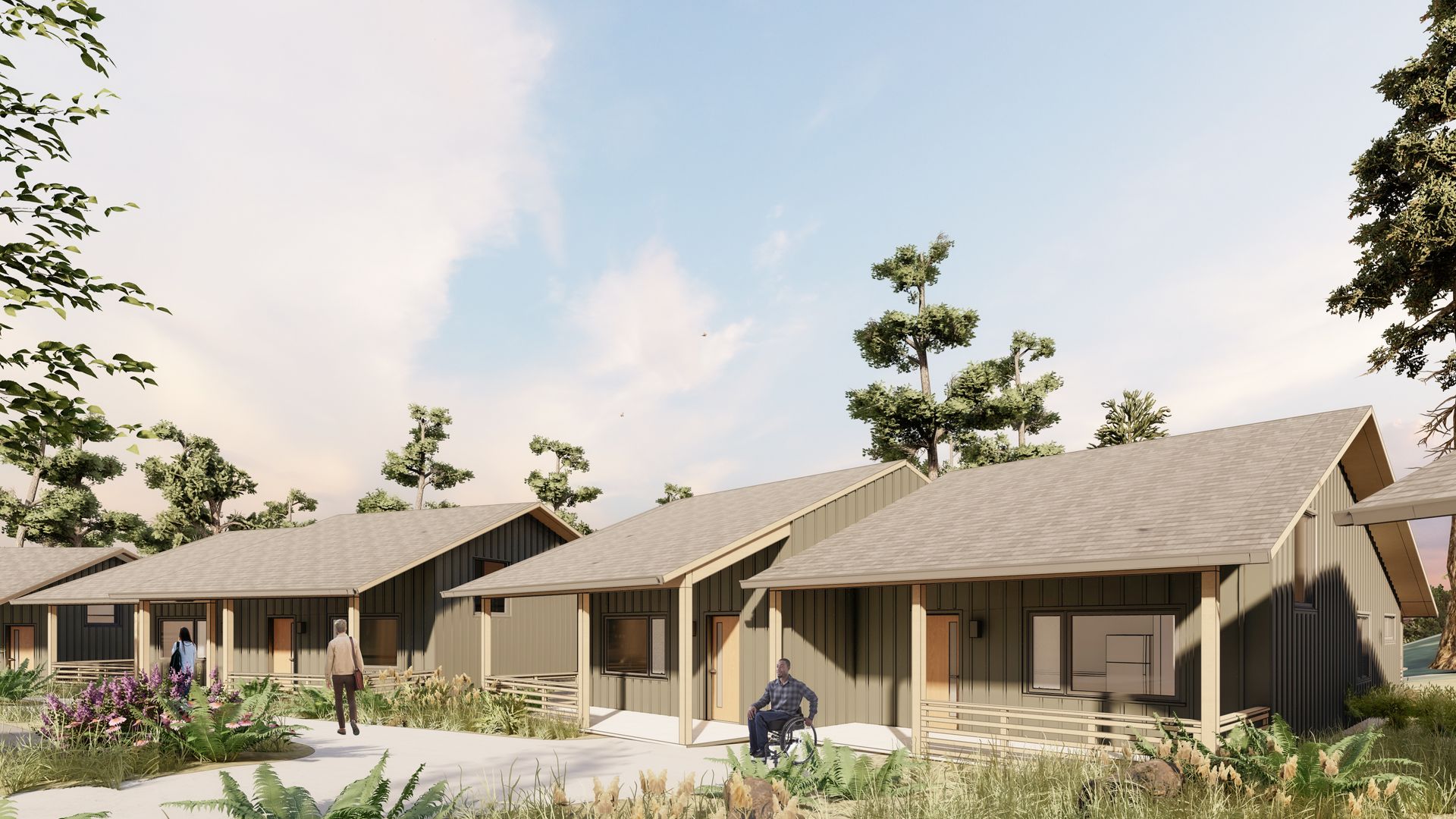
What may be most unique about the project, according to Sammy’s Place board member Kevin Shluka, is the way the entire property is being intentionally designed with access in mind through the principles of universal design.
“There really aren’t a lot of great examples of communities like this,” Shluka said. “I would love to see this be a tempest-in-a-teapot and encourage people to consider accessibility, consider how design can be more inclusive in developments.”
One of the obstacles facing people living with intellectual or developmental disability (I/DD) is better access in homes and community spaces, according to Chick, and the planned homes will remove as many barriers as possible through seven principles of universal design. Each home is being intentionally designed to be equitable, flexible, simple and intuitive; the homes will also have: perceptible information, tolerance for error, low physical effort, size and space / approach and use configurations. These principles have led to a plan where all homes will be single-story, barrier-free, and follow specific guidelines for slightly wider doorways, wheelchair-accessible showers, and adjustable heights for cabinetry. The entire property will feature generous maneuvering space at hallways and shared paths.
“Universal design is really about a mind shift,” Chick said. “Is a little wider door any different or more expensive? Perhaps not. Is a one-level entry so that people can actually get into the building and visit each other. The disability community says, ‘My ADA unit is great, but everybody else has to come here. I can’t get in my neighbor’s door’, it’s a huge conversation in Oregon.”
On the Oregon Coast, Shluka said, developments often end up being built as second-homes and infrequently feature inclusive, rather than exclusive, design.
“This is just a shining example of what can be accomplished,” he said.
Intentional design courses through the entire Thompson Springs property and will extend to the layout of the homes and the very landscaping, resulting in a place where community will grow naturally, according to Shluka.
“The design is so important because you can really sort of determine the trajectory of a community if you are able to design in such a way that it opens opportunities for every cross-section of the population,” he said.
Shluka added the emphasis on accessibility is not just to welcome people with disability but because they want to welcome people of all ages and create a space that can support people as they age, overcome an injury, or whatever else may occur in life.
“Designing something that’s got accessibility, that’s got lots of overlap – lots of opportunity to socialize, lots of opportunities to appreciate, be surrounded by nature, feel like you’re part of nature – all those things I believe are ways that design can contribute to strong community,” Shluka said.
Sammy’s Place, a non-profit aiming to help create an Oregon Coast where everybody can fully participate and thrive in their community of choice, has a capital campaign to help buy down some units for low-income families and/or individuals that need financial support. Chick said the board of Sammy’s Place has a priority to help get the mortgages even lower.
Sammy’s Place is partnering with Proud Ground, a land trust, to ensure permanent affordability with initiatives such as a homebuyer assistance program. Proud Ground will own the land and the buyer will own the home itself.
“I get excited about the homeownership opportunities,” Chick said. “A lot of people who are perhaps in a low-income bracket, certainly people in DD [developmental disabilities] services rarely, rarely have the opportunity for homeownership.”
Both Chick and Shluka said there will be additional support for the homeowners, including Proud Ground maintaining the Thompson Springs property and landscaping taken care of.
“We’re not just throwing folks willy-nilly into a home,” Shluka said. “It’s really a good opportunity for somebody who hasn’t yet experienced this to sort of land softly.”
‘Humble Beginnings’
Thompson Springs shares a property line with Nehalem City Park and was in a state of ruin when Sammy’s Place acquired the land nearly a decade ago after a conversation with former Tillamook County Commissioner Bill Baertlein led to Sammy’s Place on a journey to create affordable homeownership.
“We made an offer. We made a legitimate offer,” Chick said. “This is the piece everybody forgets. ‘The county just gave you that property’. No, we made a full-fledged reasonable offer and they said to us, Bill Baertlein said to us, ‘We need housing, give it a shot.’”
Oregon Department of Environmental Quality paid for the entire cleanup of the three-acre property and personnel, in partnership with the Environmental Protection Agency and the City of Nehalem, according to Chick.
“They spent years cleaning up,” she said. “We’re talking underground gas tank and poured oil and bits and parts and metals and cars and boats and stuff you cannot access and a freezer that was still full of meat ten years later. It was an environmental disaster very close to the Nehalem wetlands. I mean, we’re just, like, an inch away from the wetlands, two inches from the bay and we cleaned that up.”
Years of dedicated work on the site has created a special property, according to Shluka. Thompson Springs is near both Nehalem Bay and Nehalem River, but the design is focused more on shared outdoor community areas and natural aspects of the property.
“So often in development, the design I was just talking about, the design features that lead to sort of positive interactions with each other and with the environment get ignored to try and capture the best view of water,” Shluka said. “And we did none of that.”
With ground-breaking occurring in early 2026, Chick and Shluka expressed excitement for the future of Thompson Springs and how far along the property has come from those early days.
“It was humble beginnings, to be sure,” Shluka said. “And we are only at the beginning stages of the entire lifespan of this project when you consider once it’s built, not just the initial homeowners that it’s going to effect and their loved ones, but generations of homeowners and people. To imagine where this is going and how it’s going to support lives, it feels pretty good.”
For more information on Sammy’s Place or the Thompson Springs housing project, visit sammysplace.info.